





Possible Tax Deductions for Small Business Owners

Today, April 18th is the dreaded “D” Day: Taxes are due. If you are a small business owner and have waited until the last minute to take care of your taxes make sure to consider the deductions listed below. If you’ve already filed, then you can always take them into account come next year’s filing season.

You have a “Home-Business”

If you run your business is ran through your home, you can acquire a huge tax deduction.  There are two different ways that the IRS says you can qualify: 1) regular and exclusive use and 2) principal place of business.

“Regular and exclusive use” simply means that you use a spare bedroom or den in your home only to conduct business. For instance perhaps you run an online business through your bedroom or perhaps you’re a lawyer and file legal briefs etc. within one designated area on a regular basis (this is the key word, regular basis). This is not to be confused with simply having a “home office” where it serves as more of just a convenience. To learn more and how to differentiate the two, click here.

“Principal place of business,” on the other hand, means that while you may have other offices, the head office or headquarters is located within your home. Generally proof that administrative and bookkeeping tasks are completed within the home is needed to claim this deduction.  To learn more, click here.

You Wine and Dine Your Clients

The IRS also allows small business owners to claim up to 50 percent deductions if you have proof that your meal and entertainment expenses/ transactions are business-related.  This means that you have to partake in some sort of business endeavor/discussion either before the meal/event or at least after. However, you must have your receipts in order to claim this deduction (no exceptions). So if you did not save your receipts last year, start to do so now. Additional note: do not try to get deductions from un-related business meals/events. The IRS frequently audits those who claim this deduction since it is the one that is abused the most.

Business –Related Travel

If you use your personal vehicle for business-related purposes, for instance you use your car to meet up clients, customer or vendors or even to attend a local business meeting, the IRS allows you to deduct the mileage. It’s important that you keep accurate accounts and mileage records however, since this is an auditing-prone deduction as well.  To learn the standard mileage rates, click here.

If you go on a “business trip”, you can also qualify for a deduction. But like all of the other deductions the trip has to directly correlate with your line of work and you must save all of your receipts in order to receive a 100 percent deductible on your business-travel expenses.

With that said, here are some additional deductibles you can consider as well: Cost of goods sold; charitable donations; and software, advertising and education expenses.

By-line:

This guest contribution was submitted by Jamie Davis, who specializes in writing about masters degree. Questions and comments can be sent to: davis.jamie17@gmail.com.

Read More

10 Reasons Why You Should Use QuickBooks

10 Reasons Why You Should Use QuickBooks

Why You Should Use QuickBooks


QuickBooks is the ideal business accounting software for small to mid-sized business owners. I have been recommending it for over 13 years and use it myself. Below are the reasons why you should use QuickBooks:

QuickBooks Organizes your Files and Makes Tax Time Easy – Save up to 20% Now + Free Shipping.

  1. You save time on bookkeeping and paperwork because many of simple bookkeeping tasks are handled automatically making it easier to run your business.
  2. You can easily generate the reports with the information you need, so you always know where your business stands. You instantly know whether you’re making money and whether your business is healthy.
  3. You save money because QuickBooks is so affordable. You can use it to run a $5 million or a $25 million business for a few hundred bucks. PC accounting software is truly one of the great bargains in business.
  4. Your business can grow with QuickBooks. QuickBooks will help you design a business plan to use when trying to secure a small business loan or line of credit or to plan for the future. QuickBooks will create a projected balance sheet, profit and loss statement and statement of cash flows in the format recommended by the U.S. Small Business Administration.
  5. You can customize QuickBooks to work the way you want. QuickBooks is specifically designed to be flexible and adaptable to a wide range of small businesses. To broaden its appeal, QuickBooks has recently added customized accounting packages for Contractors, Retailers, Health Care Professionals, and Non-Profit organizations.
  6. You can rest assured knowing that QuickBooks is a stable, reliable and proven product. Hundreds of thousands of small businesses throughout the world have chosen QuickBooks as their accounting software. You can’t go wrong with a software program with such an extensive installed user base.
  7. You save typing time and errors by sharing data between QuickBooks and over 100 business applications. You can even share data with popular programs, such as Microsoft Excel, Word, Outlook and ACT.
  8. You will get paid faster with QuickBooks online payments. E-mail an invoice or statement and with QuickBooks Online Billing, your customer can easily pay you with a credit card or bank account transfer. No more waiting for the check in the mail!
  9. You can easily accept Credit Cards. With QuickBooks Merchant Account Service, you can accept credit cards with ease. QuickBooks Merchant Account Service is the only credit card acceptance service integrated with QuickBooks software, which means you don’t have to enter the same data twice. No additional software or hardware is required. Your customers can use Visa, MasterCard, or American Express.
  10. You can pay your bills and bank online. Setup your current bank account in QuickBooks, and you’re ready to pay your bills without licking envelopes, sticking stamps, or printing paper checks. Just write checks in QuickBooks as you normally would, then click a button and your participating bank does the rest! Pay anyone in the U.S. from your credit card companies to your pizza service. Online Banking also lets you download your monthly statement from your participating bank directly into QuickBooks for easier reconciliation.


Read More

How to Setup Payroll for Job Costing

Setup Payroll for Job CostingMany of my clients believe that setting up payroll in QuickBooks for job costing is frustrating and difficult.  There are several steps that need to be taken in order for payroll to flow properly to the job costing reports, especially if you want to include payroll taxes and benefits. The step-by-step instructions below will help guide you through the setup.  Then you won’t have any problems.

These instructions assume you have a subscription to QuickBooks payroll.   If you are trying to use job costing with a non-QuickBooks payroll provider, you will not only make your bookkeeping more time-consuming, but also introduce opportunities for errors to be made. 

Please try L & R Tax Preparations on line payroll service  if you do not have one at this time. We’re using Intuit web hosted Payroll service for our online payroll clients.

Here are the steps:

Set up Preferences:

1.  Go to Edit > Preferences > Company Preferences and select Payroll & Employees

2.  Select “Full Payroll” or “Complete Payroll Customers

3.  Check “Job Costing, Class and Item tracking for paycheck expenses

4.  Go to Time & Expenses

5.  Select Yes under “Do you track time?

6.  You may also want to check “Create invoices from a list of time & expenses”

Set up Payroll Items:

1.  Go to Lists > Payroll Items

2.  Edit every Addition and Company Contribution item to ensure that “Track expenses by job” is checked

3.  Payroll items can only map to one expense account, so you may want to setup separate ones for COGS and overhead payroll expense

4.  You can’t assign or have two payroll items for payroll taxes

Set up Employee Records:

1.  Go to the Employee Center and double-click on employee name

2.  Change Tab to Payroll & Compensation Info

3.  Check “Use time data to create paychecks

If you want to Set up Default for New Employees:

1.  Go to the Employee Center and select Manage Employee Information > Change Employee Default Settings

2.  Check “Use time data to create paychecks

Set up Workers Comp:

1.  Setup workers comp at Employees > Workers Compensation > Setup Workers Comp

2.  Setup your workers comp codes at Employees > Workers Compensation > Workers Comp List

3.  Go to Lists > Payroll Items to double-check that the Workers Comp payroll item has “Track expenses by job” checked

Using Timesheets

1. Go to Employees > Enter Time > Use Weekly Timesheet

2. Complete all information including both a payroll item & a service item (these are different) – mark as billable if you do time & material billing

3. You may want to add a customer job for overhead

4. Consider using Time Tracker or WorkTrack Time Card so employees can enter their own time.

L & R Tax Preparation also offers TimeTrackingSalesSheet for its payroll clients.

If you have more questions concerning payroll or setting up payroll please feel free to contact us at L & R Tax Preparation.

For more readable information:

  1. Payroll
  2. Online Payroll Service
Read More

Paying Off Debt the Smart Way

Being in debt isn’t necessarily a terrible thing. Between mortgages, car loans, credit cards, and student loans – most people are in debt. Being debt-free is a great goal, but you should focus on the management of debt, not just getting rid of it. It’s likely to be there for most of your life – and, handled wisely, it won’t be an albatross around your neck.

You don’t need to shell out your hard-earned money for exorbitant interest rates, or always feel like you’re on the verge of bankruptcy. You can pay off debt the smart way, while at the same time saving money to pay it off faster.

Know Where You Are

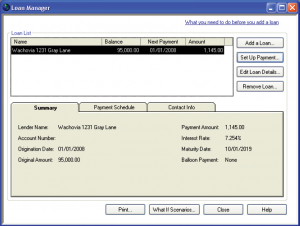
First, assess the depth of your debt. Write it down, using pencil and paper, a spreadsheet like Microsoft Excel, or a bookkeeping program like Quicken. Include every financial situation where a company has given you something in advance of payment, including your mortgage, car payment(s), credit cards, tax liens, student loans, and payments on electronics or other household items through a store.

Record the day the debt began and when it will end (if possible), the interest rate you’re paying, and what your payments typically are. Add it all up, painful as that might be. Try not to be discouraged! Remember, you’re going to break this down into manageable chunks while finding extra money to help pay it down.

Identify High-Cost Debt

Yes, some debts are more expensive than others. Unless you’re getting payday loans (which you shouldn’t be), the worst offenders are probably your credit cards. Here’s how to deal with them.

  • Don’t use them. Don’t cut them up, but put them in a drawer and only access them in an emergency.
  • Identify the card with the highest interest and pay off as much as you can every month. Pay minimums on the others. When that one’s paid off, work on the card with the next highest rate.
  • Don’t close existing cards or open any new ones. It won’t help your credit rating.
  • Pay on time, absolutely every time. One late payment these days can lower your FICO score.
  • Go over your credit-card statements with a fine-tooth comb. Are you still being charged for that travel club you’ve never used? Look for line items you don’t need.
  • Call your credit card companies and ask them nicely if they would lower your interest rates. It does work sometimes!

Save, Save, Save

Do whatever you can to retire debt. Consider taking a second job and using that income only for higher payments on your financial obligations. Substitute free family activities for high-cost ones. Sell high-value items that you can live without.

Do Away with Unnecessary Items to Reduce Debt Load

Do you really need the 800-channel cable option or that dish on your roof? You’ll be surprised at what you don’t miss. How about magazine subscriptions? They’re not terribly expensive, but every penny counts. It’s nice to have a library of books, but consider visiting the public library or half-price bookstores until your debt is under control.

Never, Ever Miss a Payment

Not only are you retiring debt, but you’re also building a stellar credit rating. If you ever move or buy another car, you’ll want to get the lowest rate possible. A blemish-free payment record will help with that. Besides, credit card companies can be quick to raise interest rates because of one late payment. A completely missed one is even more serious.

Do Not Increase Debt Load

If you don’t have the cash for it, you probably don’t need it. You’ll feel better about what you do have if you know it’s owned free and clear.

Shop Wisely, and Use the Savings to Pay Down Your Debt

If your family is large enough to warrant it, invest $30 or $40 and join a store like Sam’s or Costco. And use it. Shop there first, then at the grocery store. Change brands if you have to and swallow your pride. Use coupons religiously. Calculate the money you’re saving and slap it on your debt.

Each of these steps, taken alone, probably doesn’t seem like much. But if you adopt as many as you can, you’ll watch your debt decrease every month.

Enhanced by Zemanta
Read More

Tax for Truckers

Truck-driving is a vital industry to our economy. I have been a part of that industry for 24 years and know I will always be a part of it. I even maintain a Class A CDL. As such I am very familiar with the ins and outs of the trucking industry and its related tax issues.

Congress has designed numerous tax benefits designed specifically for truck drivers. However, I have always conceded that there is not nearly enough information available to truck drivers concerning taxes. So here, I plan to shed some light on the issue. To help truckers across the country, I have compiled the following information for Drivers, to give them/you a better idea of what could be important towards your taxes.

Trucking Tax Deductions

Keep Immaculate Records

Remember, records are the key to getting all the deductions you are entitled to and in the event of an audit are required to back up the deductions you claimed.  Get receipts for everything when you are on the road and if no receipt is available make your own receipt for the expense.  Keep your receipts together and record them somewhere, in a journal, a notebook or a computer so you can total them up at the end of the year. While an audit is never a “good” thing, as long as you have your financial information organized then you should not have anything to worry about. Throughout the year, keep your receipts and financial records together and safe in a box. When its time to get your taxes done, take the whole box in so that you have all the information you need for your preparer. I have my clients who are drivers bring them in or by as they are in town and I keep them safe for them.

People always seem to lose something; they should do accounting work themselves every month or deal with a bookkeeper to get this stuff done all year long. The income statement should be reviewed throughout the year. We can’t consult people when we see them once a year.

Track the little things

As an independent owner/operator you have the ability to claim a portion of your rent or mortgage as office space. You can also claim office expenses ranging from pencils to logbooks  things you may pay cash for and forget about. Tools such as tire chains should also be claimed. Keep receipts for everything that’s work-related and to stay organized throughout the year, even if that means visiting your accountant on a regular basis.

Meal Allowances

The Standard Meal Allowance (per diem) is different for truckers than it is for other people.  Taking the standard deduction relieves you of the responsibility of keeping records and receipts for all your meals, and most will find that the $36.00/day allowance will cover your actual expenses.  There are special rules that apply to the meal deduction that you should also be aware of.  If you get home, or pass by the house during the day you will have to pro-rate your deduction for that day. 

For example,

you’re out on the road and decide to pass by the house to collect your mail and check out the homestead.  You arrive home at 6:00 am and stay for 3 hours. 

Divide the day up into 4, 6 hour periods (Note: IRS rules state you can use any period that you consistently apply and that is in accordance with reasonable business practice.), so you would have the following 4 periods in a day –

  • Midnight to 6 am
  • 6 am to Noon
  • Noon to 6 pm
  • 6 pm to Midnight

Since you arrived home at 6 am and stayed till 9 am you would be eligible for the standard deduction for the other 3 periods which is $27.00 ($36.00 times 75% -3/4-.75) for that day.  If you arrived home at 10 am and stayed till 1 pm then you would be eligible for 2 periods or 50% of the daily deduction.  This same system would also apply to days when you arrived home for a few days off or left home to go back out onto the road.  In the event of an audit your log book would be used to validate your time at home and on the road, so hang on to those old log books. Keep a logbook with dates and amounts that you eat while on the road or it will be very difficult to come up with an accurate number.

Travel Expenses

According to the IRS, travel expenses are ordinary and necessary expenses that you pay while traveling away from home for your business or profession.  An ordinary expense is one that is common and accepted in your field of business, trade or profession.  A necessary expense is one that is helpful and appropriate to your business.  An expense does not have to be indispensable to be considered necessary.  However, you cannot deduct expenses to the extent they are lavish or extravagant. 

Anything you spend on, in or around the truck would normally be considered a deduction. 

For example:

Antennas, batteries (for the flashlight as well as the truck), binders, blankets, boots, briefcase, calculator, CB repairs, CB’s, cellular phone, chains, checking account fees (atm fees for the extra charge because you’re away from your home bank), chrome things, cleaning supplies, com check charges, coveralls, Federal Express (UPS, Postage for business mail or other mail which is necessary because of your absence from home), flashlights, gloves, hand tools, ice box, insurance, laundry, legal fees (not fines, but the cost for legal fees to defend yourself and court costs), lights, log books, luggage, lumpers, maps, motels, office supplies, pens, permits, pillows, radio, repairs, ropes & equipment, safety equipment, safety glasses, scales, scanner, sheets, showers, signs, smelly stuff, special clothes, special equipment, stapler, staples, stereo, storage, sun glasses, tarps, taxi, tires, tolls, tool boxes, truck organizations, truck parking, truck wash, truckers newspapers & magazines, TV, and uniforms. 

This list is by no means all conclusive, but it should give you the idea.  If you’re not sure about a particular item, check with the IRS or your accountant on it, especially if it’s a large expense.  If you take an expense and it’s later ruled invalid you can be charged penalties for any additional tax now due from the time the tax would have originally been due.  There are also a few other items worthy of more specific mention. 

Lumpers

If you use lumpers and are not reimbursed by the company for the amount you pay the lumper, or are only reimbursed for part of the cost of the lumper you can deduct the amount you paid or the difference if you were partially reimbursed.   Get a receipt from the lumper that includes his name, address, social security number, and the company at which you used his services, the date and the total amount you paid him. Make sure you get the information before he loads or unloads your trailer. If he won’t, chances are you don’t want him in your trailer at all.

Truck Weight

If you drive a truck with a large gross weight (over 55,000 pounds) you will need to pay the federal highway use tax by August 31st every year. If you have not already purchased a truck with this weight, be aware that if you do, this tax will be due for the first time at the end of the month in which you make your truck purchase. After you have paid it for the first time, you can decide to pay it every year in August, or in quarterly payments to reduce the burden.

Fuel Taxes

Luckily for truckers, most states appreciate your purchase of their fuel and will give you specific tax breaks. Therefore it is imperative that you keep good track of your mileage and your fuel purchases.

Hire a specialized accountant

That brother-in-law whose been filing your income tax for the last 10 years may be cheaper than an accounting firm that specializes in trucking, but does he really understand the ins and outs of the business? Chances are he doesn’t and chances are it’s costing you money.

Dealing with a specialized accountant that deals specifically with the trucking industry (spicifically drivers), allows you to maximize your claim and minimize the taxes you’re forking out each year. I think specialization means you should be getting a more knowledgeable tax return and more insight into expenses and how to handle them properly. A general accountant probably won’t get it all right, especially when it comes to things like meals. It’s important to sit down with an accountant who knows the trucking industry and discuss the intricacies of your business. An accountant who specializes in trucking will then be able to determine how you can maximize your claim.

If you have questions please let me know, With over 20 years in the trucking industry myself I will be clad to answer your questions. Contact me at L & R Tax Preparation.

Read More

10 things

Below is a list of 10 practices that you should run-through, and 10 practices you should avoid. In an effort to get this information out to my readers, I have taken this list and edited it to where from my outlook as owner of a small business accounting firm with our knowledge and experience makes a better working sense. Working on your business can be a challenging task if you are unprepared.  Please keep in mind that I have edited this for my readers, my clients, and my own commercialism. 

10 things you should be doing 

  1. Even if it’s likely you’re not going to be managing most of the financial aspects of your business, learn basic accounting concepts yourself, such as what a profit and loss statement is, what a balance sheet is, and what a cash flow statement is, just so that you’re in the know. As the owner, you need to know why and how things flow the way they do.
  2. Hire a small business accountant who is going to be familiar with your industry to manage the financial assets of your business. If you are starting your own pluming business and your accountant doesn’t know how to turn a faucet on anything else about the plumbing industry, find one that does.
  3. All Accountants will offer programs that can certainly help you do your job better, find out which ones work best for you, and then use them. Make an informed decision on the services you engage and the products you use.
  4. Update cash flow control spreadsheets at least once a month, but preferably at least weekly.
  5. You should have internal controls in place whereby you know that your business has received all of the income you have coming. If you don’t know how to do this yourself, hire someone who is a small business accounting professional to help you.
  6. When you first start, your business, it is likely to be small; because of that, you can probably manage your own bookkeeping tasks (QuickBooks Pro and Premier Conveniently come in Download Versions and are Easily Upgradable. Buy Now and Save up to 20%!). (see number one in this list) Do this if you can so that you can learn how bookkeeping works, and how to manage the finances of your business (please note, as you grow, you may/will have to turn these tasks over to someone else later).
  7. Prepare financial statements at monthly:
    1. Income statement
    2. Owner’s equity statement
    3. Balance sheet
    4. Statement of cash flows
  8. Reconcile your bank account immediately when your monthly bank statement is received. Bank reconciliations are extremely important. Unfortunately, many small business owners do not realize this, because they do not even reconcile their own personal checking account. They just figure they can look on line for a balance and as long as there is money in the account, they are fine. The issue is, bank reconciliations are a must because they are the final way to be sure all entries are made into your books and that there are not any double entries.
  9. Keep business and financial records separate, and don’t intermingle the two.
  10. Outsource your payroll and payroll accounting to a payroll service provider. (On-line payroll service provider, this is a less expensive choice.) 

Top 10 “should not”

  1. Don’t brag or over-inflate your numbers; be modest about your sales projections, and don’t underestimate what expenses are going to be.
  2. Never put your personal and business assets together.
  3. Don’t hand over control; make sure you retain the authority to assign all of your checks, and DON’T delegate this job to someone else.
  4. Don’t touch money that’s been withheld for tax purposes like payroll or sales tax and use it for anything else — even if you’ve got an “emergency.”
  5. Never pay an invoice without matching it to your purchase order.
  6. Don’t have someone else do cash flow projections analysis for you.
  7. Don’t hire a small business accountant and/or a lawyer to help you with financial matters, only to ignore their advice. They are trained and experience in what they do. Yes they make a mistake or two. You pay them good money; listen to what have to tell you.
  8. Verbal agreements are fine, but get everything in writing, too — including purchases.
  9. Never assign to others your relationship with your lending sources.
  10. Don’t wait to establish credit resources when you need financing. Instead, do it well in advance.

Okay some good advice that has been around the internet awhile. Remember while you work in your business you will need to also work on your business.

Read More

Why have I been writing about Non tax stuff?

Okay, that is becoming a big question almost to the point of being annoying. I am no longer avoiding the question. Please stop filling my inbox and comments with this question, here is the answer: 

In the Quote box below is a copy of a notice I received from NATP, National Association of Tax Professionals.  

IRS Agents Requesting Electronic Copy of QuickBooks Records 

NATP has learned that IRS agents are being instructed to obtain a copy of the taxpayer’s database for examinations for any taxpayer who uses QuickBooks. This will not be done in all examinations, only for those that the IRS agent deems necessary based on the judgment of the agent. If the taxpayer refuses to provide the database and the revenue agent (RA) or manager determines it is necessary, a Summons to obtain the information would be issued. The agents would look at only the information for the year under audit unless they decided to expand the examination to prior years, then information for those years would be reviewed.

The IRS has purchased 1,500 to 2,000 licenses from Intuit and will have one agent trained and licensed per group to assist others in the examination of taxpayers who use QuickBooks. You may not have heard of this yet, but as the software finds its way into RA groups and more agents are trained in its use, we could definitely be seeing a trend in the way exams are conducted since so many small businesses use QuickBooks.

So, in my Small Business client base, I have a lot of clients who use QuickBooks. The information is becoming more relevant to their tax situation seeing how the IRS is now getting these records.

If you have been cheating in QuickBooks, I suggest you make the corrections, now. As I said in my post Mistakes made in QuickBooks, QuickBooks is easy, thus making it user friendly, but being so easy makes it dangerous if you have no formal accounting education. And no I am not saying you need an accounting degree, but if you don’t understand basic bookkeeping, then you could really mess up your books in QuickBooks. And if you are “fudging” your numbers in QuickBooks, well now the IRS will be able to see this and then what? You could owe more in taxes to the IRS. There’s more I think on that, but my peers already think I am a bit out there, so I’ll just leave it at that.

 Please if you are using QuickBooks, get your records straight, get your “books” looked at regularly by a professional.

 Even better yet, when you find a Tax Professional ask them if they are able to review your QuickBooks files.


Read More